For many in the family this will be a first trip here, so it is worth a word about what you are arriving into. Australia is an island continent — one country covering the whole of it. Twenty-seven million people live here, almost all of them around the coastal edge, because the interior is dry, hot and close to empty.
It is really several countries in one. The north is tropical, with rainforest and reef; the centre is red desert; the south-east is temperate and green, with snow in the mountains in winter. If you have the days for it, the things worth flying for are Uluru in the red centre, the Great Barrier Reef and the Whitsundays off Queensland, the Daintree rainforest near Cairns, the Great Ocean Road west of Melbourne, and the wilderness of Tasmania. There are ski fields in the Snowy Mountains, which surprises most first-time visitors. Closer to us, the Blue Mountains are two hours from Sydney.
The eight capital cities hold most of the population between them, each the centre of its own state or territory, each with a strong opinion about which of them is best. The rivalry is old and mostly good-natured: Sydney and Melbourne argued about which was the real capital for so long that when the colonies federated in 1901 neither would concede, and a brand new capital was built inland halfway between them. That is why Canberra exists, and why Australia's capital is a city most visitors never see.
The Twelve Apostles on the Great Ocean Road, Victoria — limestone stacks left standing as the coast wore away around them.
State
Capital
People
New South WalesOldest and most populous — and where we gather.
QueenslandTropical north, the Reef and the Whitsundays.
Brisbane
5.6m
Western AustraliaA third of the continent; closer to Jakarta than Sydney.
Perth
3.0m
South AustraliaWine country, and the dry centre beyond.
Adelaide
1.9m
TasmaniaIsland state, cool and mountainous.
Hobart
575k
Australian Capital TerritoryThe national capital, built inland as a compromise.
Canberra
473k
Northern TerritoryUluru, Kakadu and the red centre.
Darwin
255k
The states and territories, their capitals, and the places worth adding days for
State boundaries: Australian Bureau of Statistics (CC BY, Commonwealth of Australia)
Hover a state to see it.
A federal democracy
Each of the six states and two territories runs its own parliament, courts, police and schools, so the law genuinely differs across a border — and a national government in Canberra sits over the top of all of them. Voting is compulsory and elections fall on a Saturday, which makes polling day feel less like a duty than a street party.
Medicare
Australia has universal public healthcare, free at the point of care for residents and funded through the tax system. Visitors are not covered by it, so travel insurance is strongly recommended for the trip.
Economy
Australia is the world's largest exporter of iron ore, and one of the largest of coal, gas, gold and beef — most of it heading north into Asia. Add education and tourism and it is one of the twenty biggest economies in the world, built on a population of only twenty-seven million. Few countries do so much with so few people.
Destination
Where we are going, and what you are arriving into — the country first, then the city, then the things worth doing while you are here.
Sydney
Our meeting place
Sydney is Australia's oldest and largest city — five and a half million people around a drowned river valley that became one of the finest natural harbours in the world. It grew outward from that harbour from 1788 and has not stopped since.
It is the country's financial capital in everything but name, and one of the most cosmopolitan cities anywhere: more than four in ten Sydneysiders were born overseas and over 250 languages are spoken here. The Filipino community is a large part of that — well over a hundred thousand Filipino-born Sydneysiders, concentrated out west around Blacktown and Mount Druitt, with parishes, grocers, bakeries and karaoke to match.
For us the practical part is that it is compact where it matters. Circular Quay to Bondi is half an hour, the harbour is walkable, and everything on our programme sits within easy reach of the centre.
Tatlong araw ng pagtitipon, kultura, at pagdiriwang.
Sydney Town Hall, 1889, with the city built up around it — the old and the new within a block of each other.
What are you in the mood for?
The building everyone knows. Daily tours, and performances most nights.
Walk across the pedestrian path for free, or climb the arch with BridgeClimb.
The highest view in the city at 250 metres. The Skywalk takes you outside onto a glass-floored platform, harnessed on — best at sunset.
Thirty minutes to Manly, past the Opera House and under the bridge. The cheapest harbour cruise in Sydney.
5.5 million
people in Greater Sydney
1788
the year the city started growing out from the harbour
Over 40%
of Sydneysiders were born overseas
250+
languages spoken across the city
100,000+
Filipino-born Sydneysiders, mostly out west
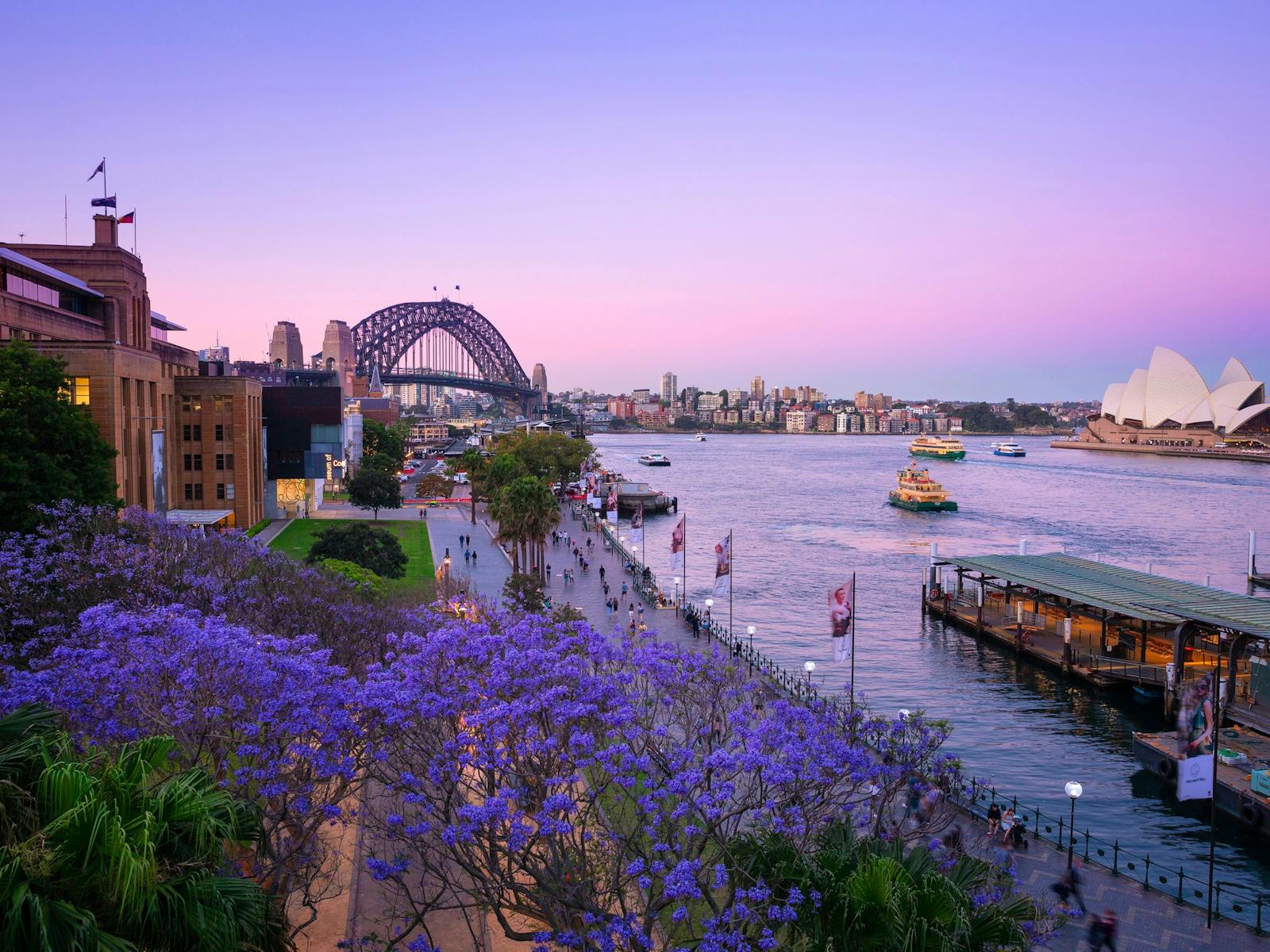
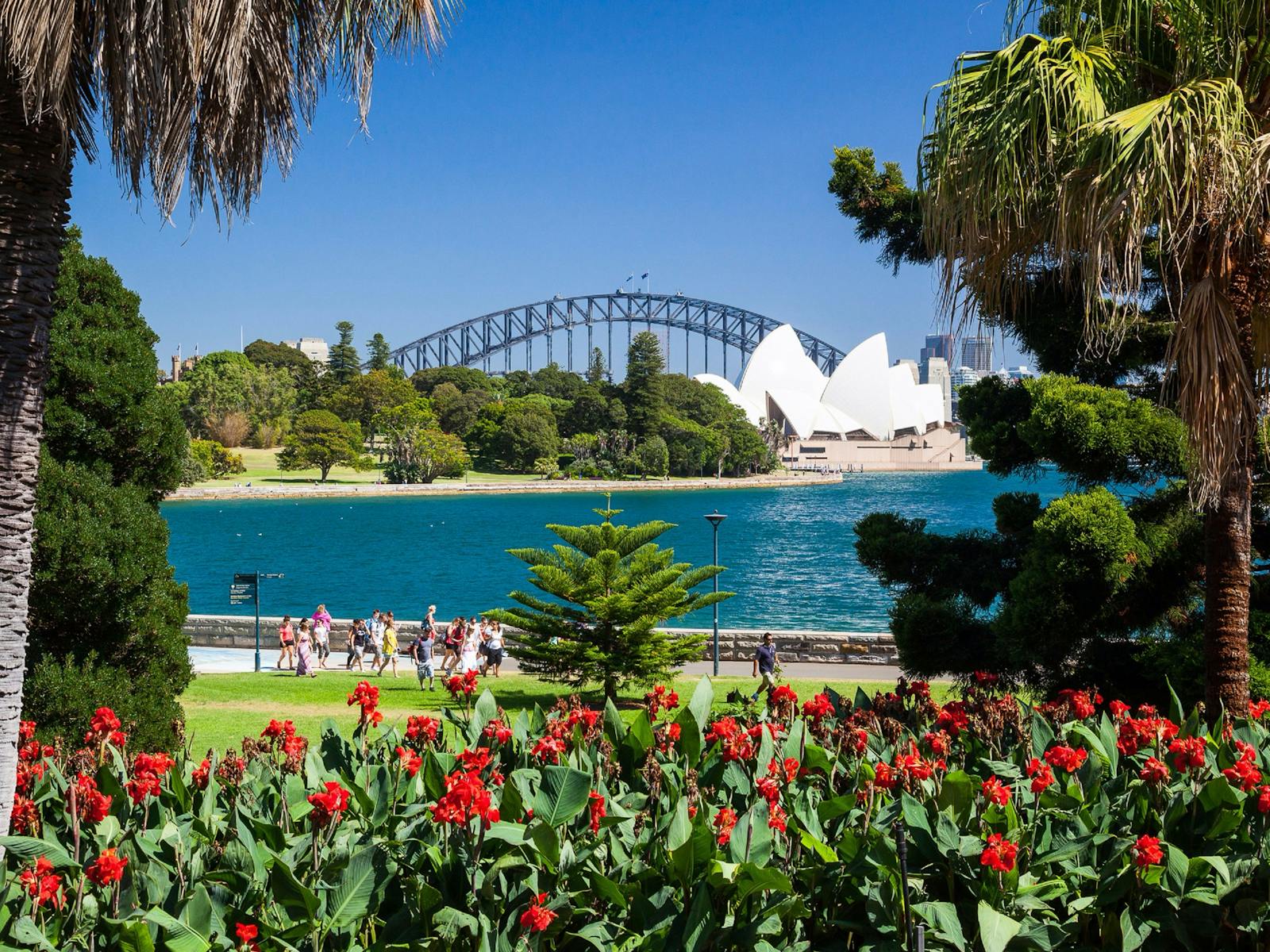
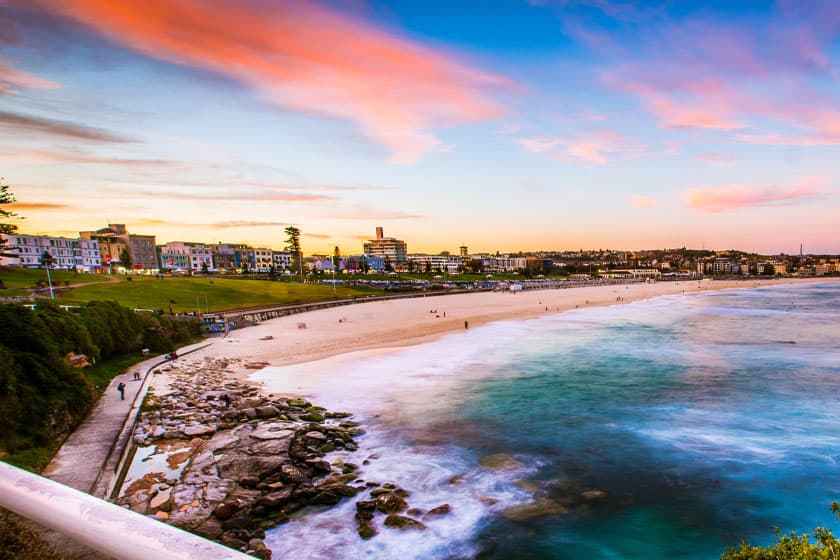
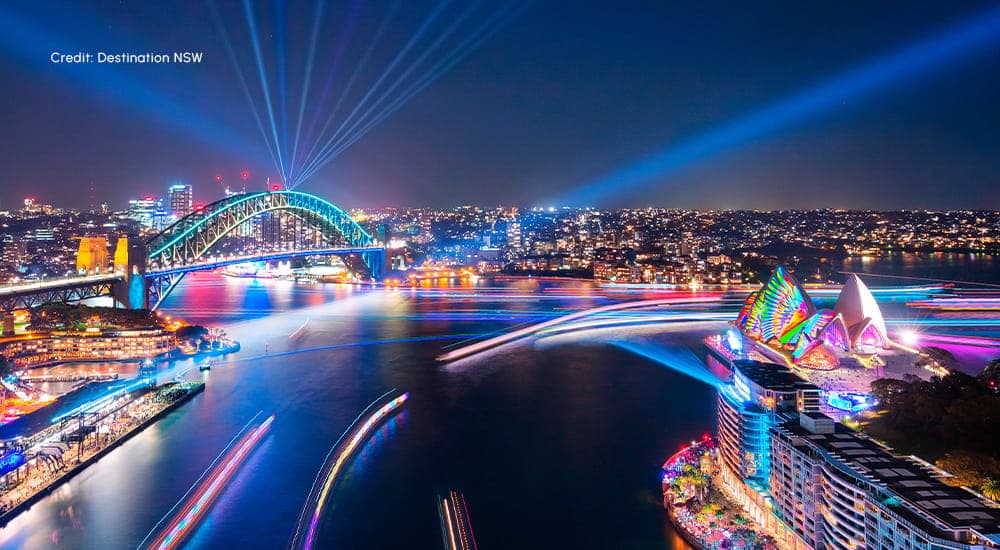
Sydney at a glance — the harbour, the coast and the places on our programme
Three days in Sydney: a city welcome at Darling Harbour, a day on the coast and at the zoo, and a farewell gala on the harbour.
Day 01
Arrival & Catchup
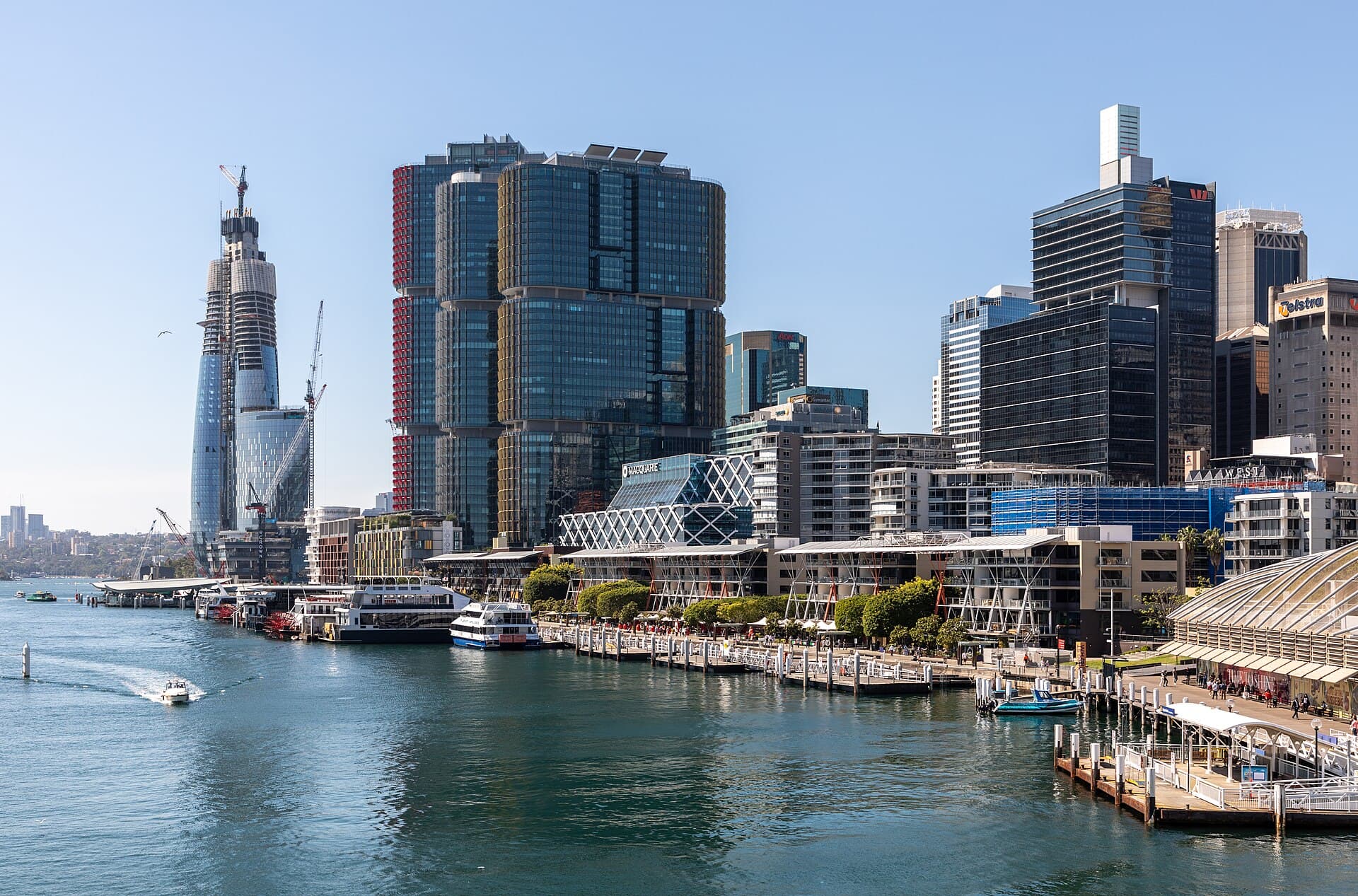
Darling Harbour · Venue TBC
Sunday 23 May 2027
Attire: City & Casual
A mid-morning start at Darling Harbour — opening prayer and welcome, introductions by region, then lunch and a long catchup before a self-guided walk through the city. Drinks after, for anyone carrying on.
A day on the coast — the famous Bondi-to-Coogee walk, lunch by the water, then a ferry across the harbour to Taronga Zoo and dinner at Darling Harbour.
Schedule
7:30 AMCharter coach to Bondi Beach
9:00 AMBondi to Coogee coastal walk
12:00 PMLunch at Coogee beachside
2:30 PMHarbour ferry to Taronga Zoo
Day 03
Gala Night & Farewell
Sydney Harbour · Venue TBC
Tuesday 25 May 2027
Attire: Formal
The farewell gala — a free morning to rest or pack, then boarding at 3pm for a Sydney Harbour dinner cruise: four courses, cultural performances, the pageant and a dinner dance.
Schedule
9:00 AMFree morning
3:00 PMBoard the dinner cruise
4:00 PMCruising the harbour
6:00 PM4-course dinner on the harbour
Travel Info
Everything practical in one place: getting to Sydney, where to stay, getting around once you are here, and getting out to the rest of the country.
Getting here
Flying in
Sydney Airport, visas and arrival
You will fly into Sydney Airport (SYD), about 8 km south of the city centre — close enough that you can see the runways from parts of the harbour. From Manila the route is well served: Qantas flies it directly and is usually competitive on price, and it carries a certain amount of history with it, having flown since 1920 as one of the oldest airlines in the world. Philippine Airlines runs the route too.
International flights arrive at Terminal 1. You will clear immigration first, then collect your baggage, then pass through customs and biosecurity on the way out. Allow a good while for all of it — arrival day is the one day of the trip you cannot rush.
Once you are out, the simplest way to your hotel is the train from beneath the terminal, which reaches the city in about fifteen minutes, or an Uber or taxi from the ranks outside — twenty to thirty minutes depending on traffic, and easier if you are travelling with luggage or a large family.
Visas
Everyone who is not an Australian citizen needs a visa or travel authority granted before they board — you cannot get one on arrival. Apply through the Department of Home Affairs and start early, because a visitor visa can take weeks and longer in busy periods.
Money in Australia
The dollar here is the Australian one, and it is not the US dollar — check the rate before you assume a price. Cards are accepted almost everywhere and cash is genuinely rare; many cafés and buses take no cash at all. Tipping is not expected, prices already include tax, and the number on the label is the number you pay.
The arrival card
Australia is strict about food, plants, seeds, wooden items and anything made from animals. Dried fish, meat, fresh fruit and many snacks are not allowed in. Declaring costs nothing even if the item is then taken off you. If you are unsure about something, declare it and ask for assistance.
Accommodation
Where to stay
Picking a base for the three days
Where you base yourself changes how easy the three days feel, so it is worth a little thought before you book. The one rule to follow: pick somewhere on a train line, preferably within about twenty minutes of the city centre. Everything on the programme is reachable from there without a car.
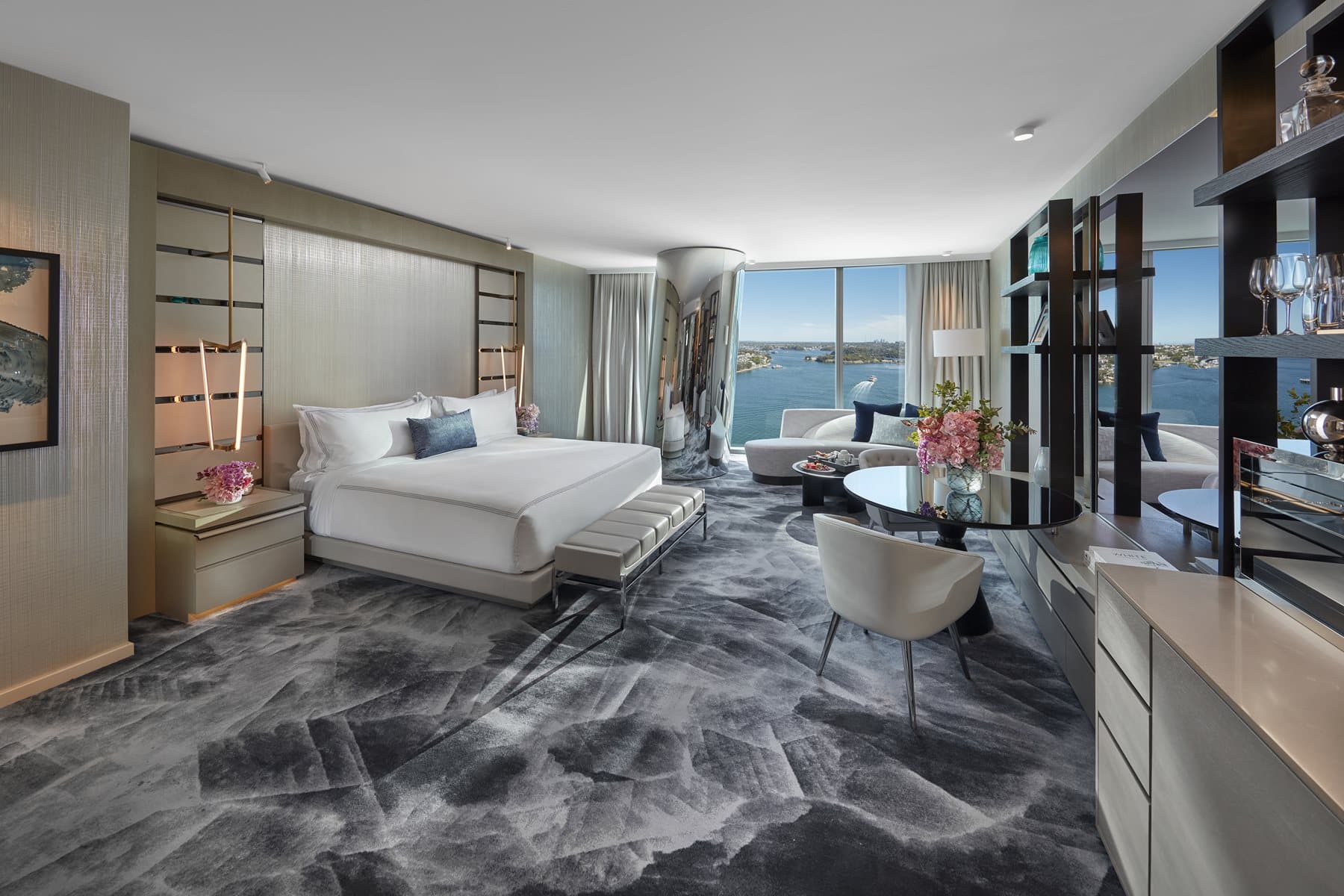
Prices are rough guides for a standard double room per night in May, which is off-peak. Apartment-style places with a kitchen cost more per night than a hotel room but far less than booking two, which is what makes them worth hunting for when you are travelling as a family.
A$250–450 a night
The city centre
The CBD, Circular Quay and The Rocks. Walk to most of the programme, ferries at your door, and you will pay for the privilege.
A$180–320 a night
Darling Harbour & Haymarket
Still walkable, noticeably cheaper, and where most of the apartment hotels are. Next to Chinatown, with cheap food at every hour.
A$100–220 a night
A few stops out
North Sydney, Mascot, Green Square or Parramatta. All on the train, all well under half an hour in, and the cheapest rooms on this list.
Local transport
Getting around Sydney
Trains, ferries, buses and how to pay
One ticketing system covers trains, the metro, light rail, buses and ferries across greater Sydney, and you do not need to buy anything in advance. Tap on with a contactless bank card, a phone or a watch, tap off at the end, and the fare is worked out for you. An Opal card from a station does the same job. Fares are capped per day and per week, and Sundays are capped low all day — but only if you use the same card or device for every trip, and each traveller taps their own.
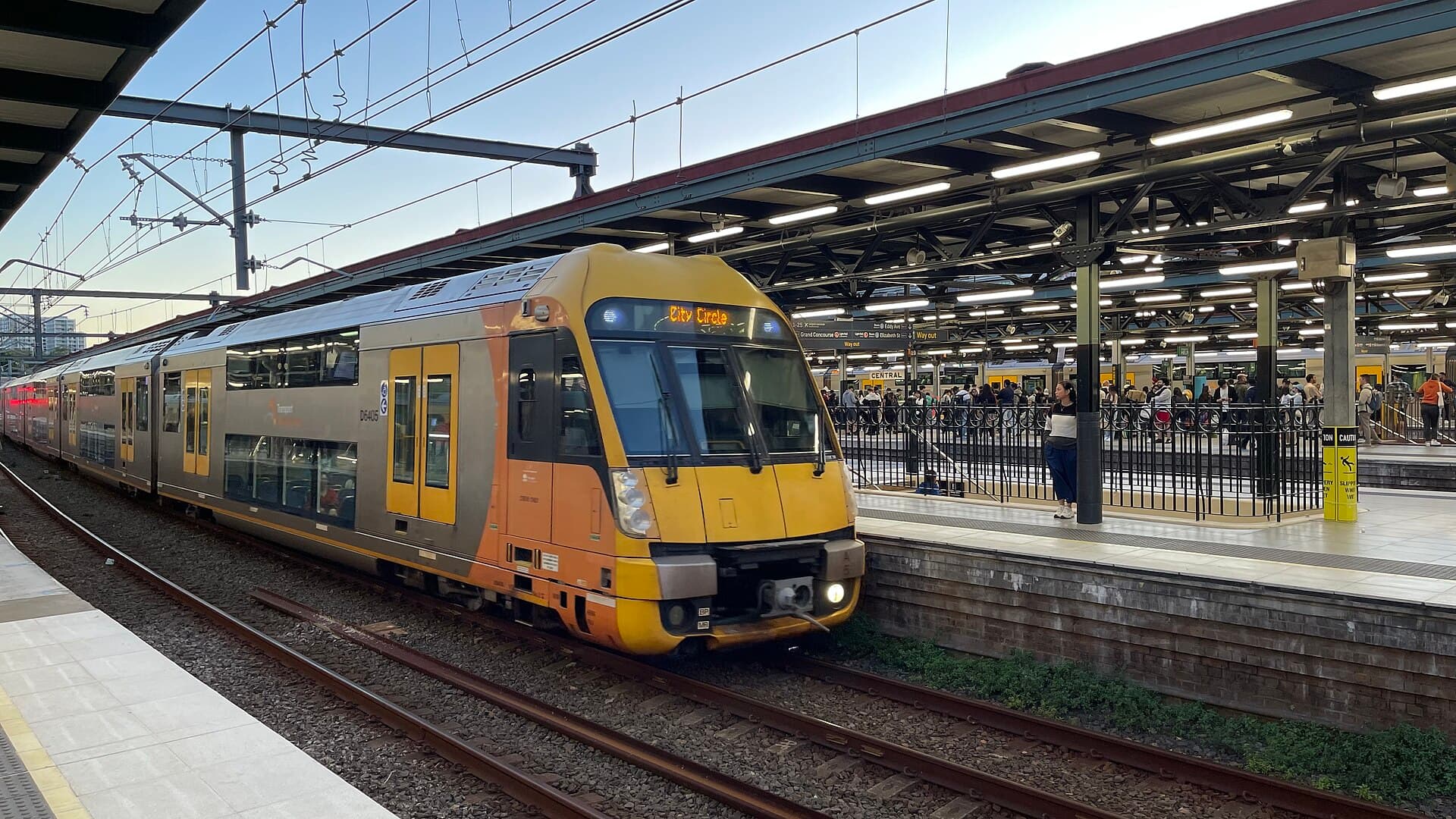
Trains are the backbone: the numbered T lines plus a driverless metro. Town Hall, Wynyard, Martin Place and Circular Quay all serve the city centre, and airport services run on the T8 line.
Central is the one station to know. Every suburban line passes through it, the metro and light rail meet it, and the regional and interstate trains all leave from there — so if you are going further than Sydney, you are probably starting at Central. It is the largest station in the country, under a sandstone clock tower that has stood over the south end of the city since 1921.
Every harbour ferry leaves from Circular Quay, which is what makes it the hub for our three days. The Manly and Taronga Zoo runs are worth taking for the ride alone — the Manly ferry is the cheapest harbour cruise in Sydney. Buses fill in where the trains do not reach, Bondi among them: take a train to Bondi Junction, then the bus down the hill.
If you are travelling this far, it is worth seeing more than one part of the country. The rule of thumb is simple: anything within about three hours you can drive, and anything past that you fly.
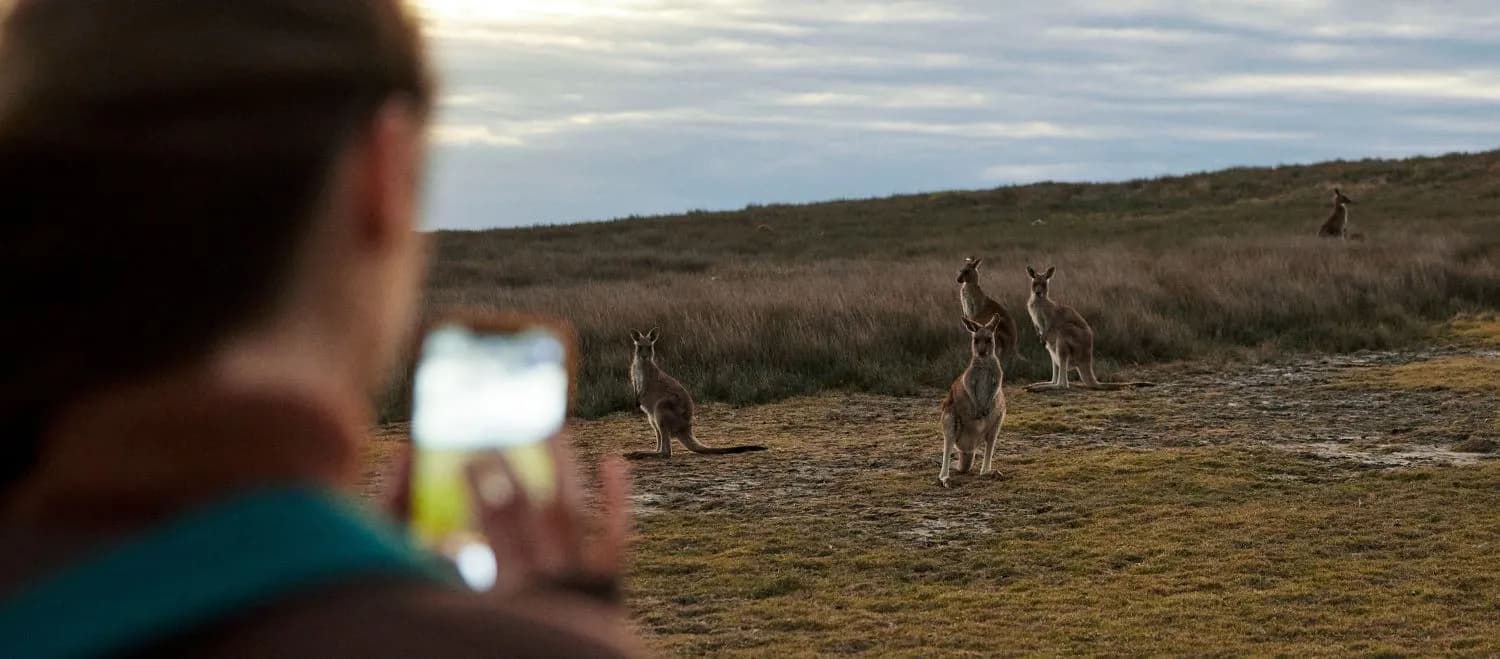
If you do drive, remember Australians drive on the left and a valid overseas licence in English is fine, or carry an International Driving Permit alongside it. Distances between towns are long and petrol stations can be far apart once you leave the coast, so fill up when you can, and watch for kangaroos at dawn and dusk.
One thing visitors consistently get caught by: speed limits here are enforced strictly, and not by police cars. Fixed and mobile speed cameras are everywhere, signposted and unsignposted, and the fines are steep — hundreds of dollars for being barely over. There is no informal tolerance the way there is in some countries. Watch the signs, because the limit changes often, and simply stick to it.
Whatever you choose, give yourself the days to enjoy it. These are long distances, and it would be a shame to fly three hours to Uluru or Cairns only to turn around again.
The Sea Cliff Bridge on the Grand Pacific Drive, an hour south of Sydney — the road runs out over the water where the cliffs left it no room.
Trains out of Sydney
Everything regional leaves from Central. Opal covers the intercity lines — the Blue Mountains, Newcastle, Wollongong and the Central Coast — while NSW TrainLink books the longer runs: Canberra in about four hours, Melbourne or Brisbane overnight. Slower than flying, and you see the country.
Most Australians would not consider driving between states — they fly. Qantas, Virgin Australia and Jetstar are the main carriers out of Sydney, and fares can be very cheap: Sydney to the Gold Coast can be had for as little as A$59.
Worth it for the Blue Mountains, the Hunter Valley or the coast; not worth it inside Sydney, where parking is expensive and the trains go everywhere. The major firms all have desks at the airport and in the city, and you will usually need a credit card and to be over 21.
Book now: choose the attendees for your group, then check out with online payment.
Prices are estimates while venues are confirmed. Nothing is charged until you check out.
Mabuhay!
We cannot wait to welcome you to Sydney. Whether you are flying in from Iriga, from somewhere else in the Philippines, or from anywhere else in the world, this is three days we have been looking forward to for years.